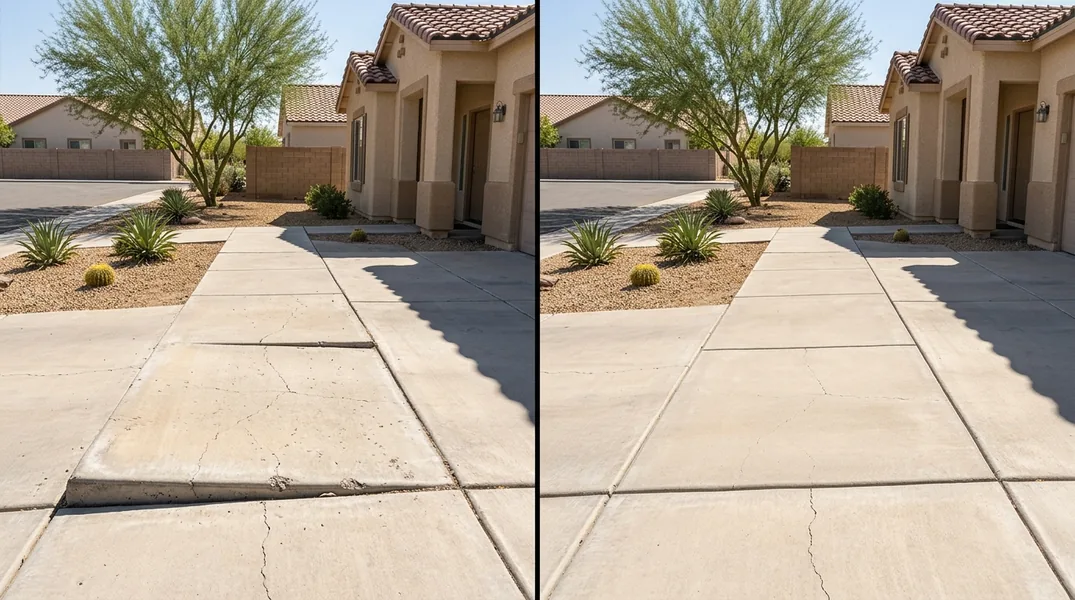
The Desert Climate Challenge: Why Heat Accelerates Concrete Cracking in Las Vegas
Las Vegas summers are brutal, with temperatures regularly exceeding 110 degrees Fahrenheit. This extreme heat puts enormous stress on concrete, and many homeowners don't realize how much damage the sun and temperature swings can cause to their driveways, patios, and walkways.
Concrete expands when it heats up and contracts when it cools down. In a typical climate, these temperature variations are gradual and manageable. But in Las Vegas, the daily temperature swings can be extreme. A driveway might experience a 40 to 50-degree temperature difference between midday and early morning. This constant expansion and contraction creates internal stress within the concrete, eventually leading to the hairline cracks that turn into larger fissures over time. Once cracks form, water seeps in, freezes during cooler nights, and expands, widening the damage further. This freeze-thaw cycle, though less severe than in northern climates, still wreaks havoc on desert concrete year-round.
The intense UV radiation also degrades the surface of concrete, causing it to become brittle and more prone to spalling, where the top layer begins to peel away. If you've noticed your driveway or patio looking weathered and chalky, that's UV damage at work. This is why professional Concrete Repair & Resurfacing services are essential for desert homeowners who want to extend the life of their investment.
Expansive Caliche Soil: The Hidden Enemy Beneath Your Driveway
If you live in Las Vegas, your property sits on expansive caliche soil, a naturally occurring layer of calcium carbonate that binds desert soil together. While caliche provides some structural stability, it's also one of the most challenging soil conditions for concrete construction. Caliche expands and contracts with changes in moisture content, and unlike typical soil, it can shift dramatically even when moisture levels fluctuate only slightly.
When the ground beneath your Concrete Driveways or Concrete Patios moves, the concrete above it cracks. This is called differential settling, and it's one of the most common reasons homeowners in the valley experience concrete cracking. The problem intensifies during our rare rainy seasons. When moisture penetrates the caliche layer, it swells. When the desert heat dries it out again, it shrinks. Your concrete bears the weight of these movements and eventually fails.
The caliche issue is so significant in southern Nevada that experienced concrete contractors always account for soil conditions during the planning and preparation phase. Poor site preparation or inadequate base preparation can accelerate caliche-related damage. This is why choosing a local contractor who understands desert soil conditions matters far more than hiring someone unfamiliar with regional geology.
Desert Heat and Concrete Curing: Why Installation Timing Matters
Most homeowners don't think about when their concrete is poured, but in desert climates, timing is everything. Concrete curing requires specific conditions to achieve proper strength and durability. The ideal curing temperature range is between 50 and 85 degrees Fahrenheit. In Las Vegas, summer temperatures far exceed this range, and the rapid evaporation caused by extreme heat actually interferes with the curing process.
When concrete is exposed to intense desert heat immediately after being poured, the surface dries too quickly while the interior is still curing. This creates internal stress and leads to surface cracking, often appearing as a map-like pattern called crazing. Additionally, the concrete may not develop its full strength because the curing process was rushed. Contractors who don't account for desert heat often apply inadequate curing compounds or fail to properly protect freshly poured concrete from direct sun exposure.
Professional concrete contractors in the desert know to schedule pours during cooler months (October through April) whenever possible, or to pour very early in the morning during summer. They also use specialized techniques like wet curing, shade cloth, and curing compounds that are specifically formulated for hot, dry climates. If you're planning a new Stamped & Decorative Concrete project, discussing timing and curing methods with your contractor is critical to avoiding premature failure.
Concrete Cracking Las Vegas: Common Patterns and What They Mean
Not all concrete cracks are created equal. Understanding what your cracks look like can help you identify the underlying problem. Hairline cracks that branch out in multiple directions often indicate thermal stress from heat expansion and contraction. Linear cracks running across the surface in a single direction typically point to caliche soil movement or settling. Cracks that follow the edges of your driveway or patio usually mean the perimeter is experiencing more stress than the center, often due to inadequate base preparation or poor drainage.
Spalling, where chunks of concrete surface flake away, is almost always caused by freeze-thaw cycles combined with salt exposure or UV damage. Potholes and larger voids indicate that the concrete has failed structurally, usually because the base beneath it has compromised. Each crack pattern tells a story about what went wrong, and professional contractors can diagnose the root cause by examining the crack pattern, location, and surrounding soil conditions.
If you're seeing any of these issues on your property, it's time to call a professional. The longer you wait, the worse the damage becomes, and repair costs escalate quickly. Las Vegas Concrete specializes in identifying and fixing these problems. Contact us at (725) 765-4513 or request a free estimate to learn what's happening beneath your concrete and what solutions are available.
Protecting Your Concrete in the Desert: Prevention and Maintenance
The good news is that concrete damage in Las Vegas is preventable with proper care and professional maintenance. Sealing your concrete every 2 to 3 years is one of the most effective protective measures. A quality concrete sealer creates a barrier against UV rays, water infiltration, and salt exposure. It also helps reflect heat, reducing the temperature fluctuations your concrete experiences. For desert climates, penetrating sealers that allow the concrete to breathe are often more effective than surface sealers.
Proper drainage is equally important. Water pooling on your driveway or patio accelerates damage because standing water seeps into cracks and weakens the base. Make sure your concrete slopes slightly away from structures and that gutters and downspouts direct water away from concrete surfaces. During the rare times it rains in the desert, monitor your property to ensure water isn't collecting in low spots.
Regular inspection and prompt repair of small cracks can prevent them from becoming large, expensive problems. If you notice new cracks forming, don't wait. Small cracks can be sealed with concrete crack filler to prevent water infiltration. Larger structural issues require professional Concrete Repair & Resurfacing services. The team at Las Vegas Concrete can assess your concrete's condition and recommend preventive maintenance strategies tailored to desert conditions. Call us today at (725) 765-4513 to schedule an inspection.
When to Call a Professional Concrete Contractor Near Me
If you're experiencing concrete cracking in Las Vegas, attempting DIY repairs is rarely a good idea. The underlying causes of concrete failure in the desert are complex, involving soil conditions, heat stress, and structural integrity issues that require professional expertise to diagnose and fix properly. A contractor who understands desert soil conditions, local climate challenges, and regional building standards will provide solutions that actually last.
When you contact a concrete professional, they should conduct a thorough site assessment, discuss the history of your concrete (when it was poured, any previous repairs, drainage conditions), and explain the root cause of your problems in terms you can understand. They should also discuss options for repair or replacement, along with realistic pricing for the work. Reputable contractors provide detailed written estimates and stand behind their work with warranties.
Las Vegas Concrete has spent years helping homeowners across the valley solve concrete problems caused by desert heat and expansive caliche soil. We understand the unique challenges of building and maintaining concrete in southern Nevada, and we're committed to providing solutions that protect your investment for years to come. Whether you need repairs to an existing driveway or you're planning a new concrete project, we're here to help. Reach out to us at (725) 765-4513 or visit our website to request a free estimate. Let's discuss how we can solve your concrete problems and prevent future damage.
Looking for a professional tree service in Las Vegas? Las Vegas Concrete responds fast for all your concrete needs.
Get a Free QuoteOur services: Concrete Driveways · Concrete Patios · Stamped & Decorative Concrete